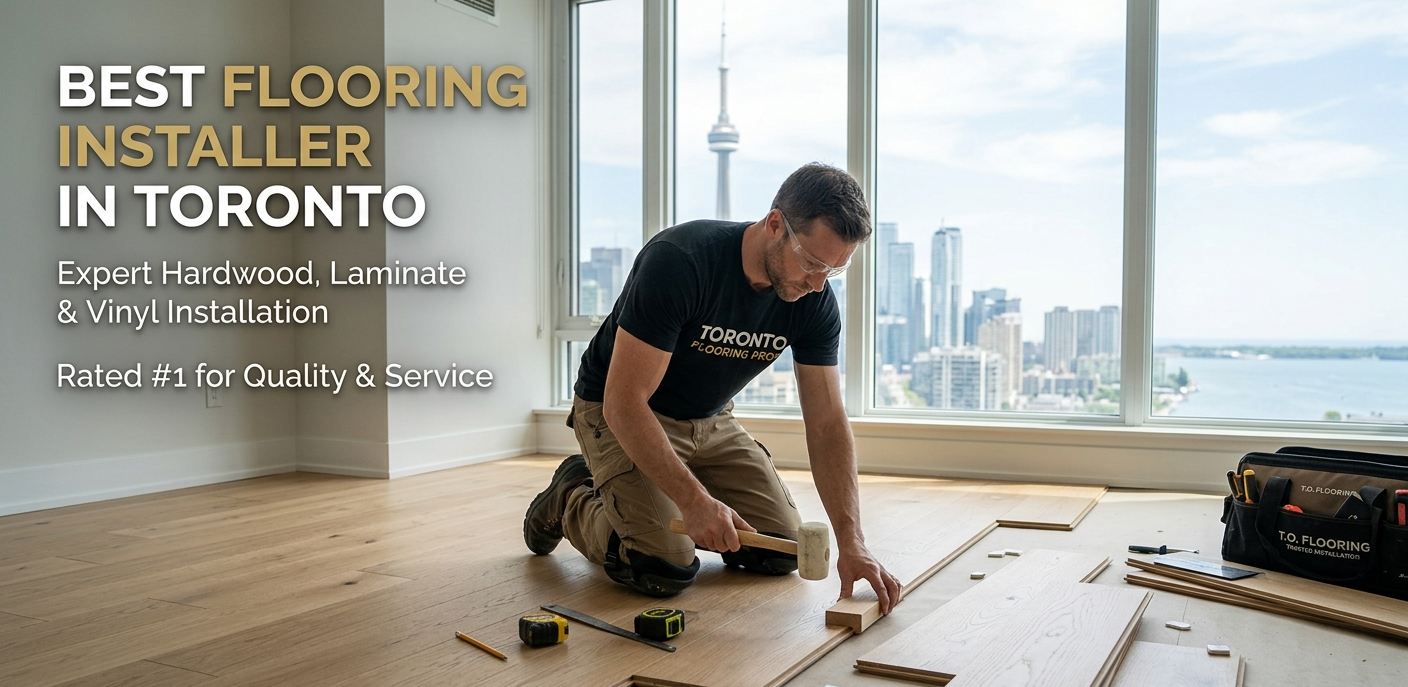
Best Flooring Installer in Toronto | Licensed, Reviewed & Verified
Flooring in Toronto takes a beating — salt, humidity swings, and daily traffic all stress your floors. Solid hardwood expands and contracts with the seasons, engineered hardwood offers better stability, LVP is waterproof and ideal for basements, and tile requires proper waterproofing to avoid failure. Subfloor condition is the hidden variable that determines whether your flooring lasts or fails. GTA Trades Daily connects you with licensed, insured, reviewed flooring installers who understand Toronto’s climate, humidity, and subfloor challenges. Find verified flooring installers in Toronto who install floors built for real Toronto conditions.
Flooring is the most used and most abused surface in any Toronto home. Salt-tracked boots, humidity swings, and daily foot traffic all take a toll. Choosing the right flooring material is half the job — choosing the right installer is the other half.
GTA Trades Daily connects you with licensed, insured, reviewed flooring installers serving Toronto who handle hardwood, engineered wood, tile, luxury vinyl, laminate, and specialty flooring across every neighbourhood.
What Toronto Homeowners Need to Know About Flooring
Toronto’s Humidity SwingsIndoor humidity ranges from 15–20% in winter to 60–70% in summer. This 40–50 point swing causes solid hardwood to expand and contract — gaps in winter, cupping in summer. This is normal physics, not a defect.
Solid HardwoodTraditional and common in older Toronto homes. Many pre‑1960 homes have original 3/4-inch strip hardwood under carpet that can be refinished instead of replaced.
Engineered HardwoodMore stable than solid wood and ideal for condos and basements. Its layered construction resists humidity-driven movement.
Luxury Vinyl Plank (LVP)Waterproof, durable, and ideal for basements, rentals, and high-traffic areas. SPC-core LVP handles temperature swings without expanding or contracting.
Tile FlooringStandard for bathrooms, kitchens, and entryways. Proper waterproofing membranes are essential — failed waterproofing is the #1 cause of tile failures in Toronto.
Subfloor ConditionSubfloor issues — moisture, unevenness, soft spots — must be addressed before installation. A professional installer evaluates subfloor conditions before quoting.
Top Flooring Services in Toronto
Hardwood Flooring Installation- Solid and engineered hardwood
- Nail-down, glue-down, floating
- Herringbone, chevron, wide plank
- Sanding, staining, recoating
- Dustless sanding systems
- 3–5 refinishes possible for most Toronto floors
- Click-lock floating installation
- Waterproof and basement-friendly
- SPC-core for stability
- Budget-friendly
- Floating installation
- Not suitable for wet areas
- Porcelain, ceramic, natural stone
- Waterproofing membranes in wet areas
- Heated floor systems available
- Moisture testing
- Vapour barriers
- Subfloor systems like DRIcore
- Hardwood, engineered, or LVP treads
- Nosing and stringer finishing
- Board replacement
- Scratch and gouge repair
- Water damage restoration
- Electric radiant heating
- Ideal for Toronto bathrooms and kitchens
- Sound-rated underlayment for condos
- High-traffic commercial flooring
Pricing Guide for Flooring in Toronto
- Solid hardwood: $8–$14 per sq ft
- Engineered hardwood: $7–$13 per sq ft
- Hardwood refinishing: $3.50–$5.50 per sq ft
- LVP (SPC core): $5–$9 per sq ft
- Laminate: $4–$7 per sq ft
- Porcelain tile: $10–$18 per sq ft
- Natural stone tile: $15–$30 per sq ft
- Carpet: $4–$8 per sq ft
- Basement subfloor system: $3–$5 per sq ft
- Stair refinishing: $80–$150 per step
- Stair cladding: $120–$250 per step
- Radiant heated floors: $10–$16 per sq ft
- Old flooring removal: $1–$2.50 per sq ft
Complex layouts, furniture moving, and subfloor prep add to the total cost.
How to Choose the Right Flooring Installer in Toronto
Trade ExperienceHardwood, tile, and vinyl are different skill sets. Ask how many years they’ve worked in Toronto and what flooring types they specialize in.
Subfloor Assessment- Moisture testing
- Levelness checks
- Structural integrity
- Existing flooring condition
Minimum $2M liability and WSIB coverage for crews.
Written Quote- Material brand and product line
- Installation method
- Subfloor prep
- Furniture handling
- Transitions and baseboards
- Disposal
Look for comments about subfloor prep, seam visibility, and performance after one full humidity cycle.
Red Flags- No subfloor inspection
- No moisture testing on concrete
- Installing solid hardwood on concrete
- Skipping waterproofing under tile
- No written contract
Why Local Matters
Toronto’s humidity extremes, condo sound rules, and basement moisture issues require local expertise. A Toronto-based installer knows which materials perform well and how to prepare subfloors properly.
GTA Trades Daily verifies every flooring installer’s insurance, credentials, and service area.
Frequently Asked Questions
How much does flooring cost?Engineered hardwood: $7–$13 per sq ft. LVP: $5–$9. Tile: $10–$18. Refinishing: $3.50–$5.50.
Refinish or replace?Refinish if you have 3/4-inch solid hardwood in good condition.
Best flooring for basements?LVP (SPC core) or engineered hardwood over a subfloor system.
Do hardwood floors gap in winter?Yes — humidity drops cause seasonal gaps. This is normal.
Best flooring for condos?Engineered hardwood or LVP with sound-rated underlayment.
How long does installation take?1,000 sq ft takes 2–3 days for hardwood or LVP; 3–5 days for tile.
Final Takeaway
Flooring in Toronto must withstand humidity swings, salt, moisture, and daily wear. The right installer ensures your floors look and perform the same in February as they do in August.
Find your flooring installer in Toronto now at GTA Trades Daily.